Four days of intensive, practical training for healthcare professionals who may have to provide advanced emergency care when conventional medical support is no longer immediately available.
Train for the situation where evacuation is not the solution — at least not yet.
 The Austere Emergency Care (AEC) Course is an intensive four-day programme designed for participants who may be required to manage seriously ill or injured patients when immediate access to definitive medical care is not available.
The course focuses on providing effective emergency and critical care in remote, resource-limited and austere environments, where evacuation may be delayed for hours or potentially longer.
AEC challenges participants to move beyond the traditional concept of rapid stabilisation and transport. Instead, participants must consider:
What happens when you cannot simply transport the patient to hospital?
During the course, participants learn to assess, stabilise, monitor and continue caring for a patient over an extended period using limited personnel, equipment and resources.
What is Austere Emergency Care?
Austere Emergency Care is the practice of delivering high-quality emergency and critical care when normal healthcare infrastructure, resources or evacuation options are unavailable.
The course prepares participants to provide timely and effective treatment to serious and critically ill casualties in situations without immediate access to robust medical supervision or hospital support.
The philosophy behind AEC can be summarised simply as:
Good medicine in bad situations.
Participants learn how to make effective use of the equipment, medications, clinical skills and personnel available while simultaneously planning for prolonged patient management and eventual evacuation.
From Prolonged Field Care to Austere Emergency Care
The origins of AEC are closely connected to the development of Prolonged Field Care (PFC) within U.S. and NATO Special Operations medicine.
The term Prolonged Field Care emerged around 2013 as Special Operations medical providers recognised that future missions could require critically injured patients to be managed for extended periods before evacuation.
Military medical teams deploying to remote locations increasingly encountered situations involving large distances, limited infrastructure and delayed evacuation. These environments demanded a different approach from the rapid evacuation models that had characterised many previous conflicts.
Training programmes were subsequently developed to prepare Special Operations medics to manage critically ill and injured casualties for prolonged periods in austere environments.
Specialized Medical Standards (SMS) was established in 2020 as a non-profit organisation to translate these experiences and best practices into structured educational programmes suitable for a wider professional medical community.
The resulting Austere Emergency Care curriculum draws upon lessons from military Prolonged Field Care while adapting them to civilian EMS, remote medicine, rescue services and other healthcare environments.
Who should attend?
AEC is intended for participants who may encounter situations where conventional medical resources or rapid evacuation are unavailable.
The course is particularly relevant for:
- Paramedics
- Ambulance personnel
- Nurses
- Physicians
- Military medics
- Tactical and operational medical personnel
- Search and Rescue personnel with an advanced medical role
- Offshore and maritime medical personnel
- Remote-site healthcare providers
- Expedition and wilderness medicine personnel
- Humanitarian and disaster-response healthcare professionals
Participants should have an established clinical background appropriate to the level of AEC training they attend.
What will you learn?
AEC integrates emergency medicine, trauma care, critical care and prolonged casualty management.
Rather than teaching individual procedures in isolation, the course focuses on combining assessment, clinical decision-making, procedures, monitoring and nursing care into a structured approach to prolonged patient management.
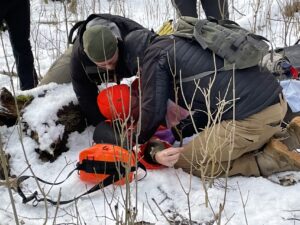 Training may include:
Prolonged casualty management
Develop a systematic approach to managing seriously ill or injured patients when evacuation is delayed.
Learn to reassess patients continuously, identify changing clinical priorities and develop a treatment plan that may extend over several hours.
Advanced trauma care
Participants develop advanced approaches to managing complex trauma in environments where immediate surgical or specialist care may not be available.
This includes decision-making regarding haemorrhage, chest trauma, abdominal trauma, traumatic injuries and complications associated with delayed evacuation.
Haemorrhage and shock
Recognition and management of haemorrhagic shock, including advanced resuscitation strategies and ongoing reassessment of the patient’s response to treatment.
Airway and respiratory management
Assessment and management of airway and breathing problems when advanced hospital resources are unavailable.
Participants must consider not only the initial intervention but how the airway and ventilation strategy can be safely maintained over time.
Sepsis and serious medical illness
AEC is not solely a trauma course.
Participants also train to recognise and manage serious medical conditions such as infection, sepsis and shock, including clinical assessment, resuscitation, medication and ongoing monitoring when evacuation is delayed.
Advanced procedural skills
Depending on professional scope of practice, participants are exposed to advanced procedures relevant to austere and prolonged patient care.
The emphasis is not simply on performing a procedure, but understanding:
- when an intervention is indicated;
- when it is not indicated;
- what equipment and resources are required;
- how the patient must be monitored afterwards; and
- how complications can be recognised and managed.
Austere surgical and wound-management skills
Participants develop practical skills for managing traumatic wounds and injuries when surgical support may be delayed.
The objective is not to replace definitive surgical care, but to understand what interventions may be required to stabilise and protect a casualty until evacuation becomes possible.
Nursing and prolonged patient care
Keeping a critically ill patient alive for an extended period requires considerably more than performing emergency procedures.
AEC therefore places significant emphasis on nursing care and ongoing patient management, including:
- regular reassessment;
- vital-sign trending;
- fluid balance;
- pain management;
- temperature management;
- patient positioning;
- wound care;
- medication scheduling;
- infection prevention;
- documentation; and
- planning for deterioration.
These fundamental elements become increasingly important as evacuation time increases.
Patient monitoring and trending
Participants learn to use repeated clinical assessment and available monitoring equipment to identify trends rather than relying on isolated vital signs.
The ability to recognise deterioration early is a fundamental capability in austere medicine.
Point-of-care ultrasound
Where appropriate, ultrasound is incorporated as a decision-support tool for austere and prehospital care.
Participants explore how point-of-care ultrasound can contribute to assessment and decision-making when advanced diagnostic imaging is unavailable.
Telemedicine and remote clinical support
Modern austere medicine increasingly involves connecting providers in the field with specialist support elsewhere.
AEC therefore explores the practical use of telemedicine, including how to communicate patient information, clinical findings and treatment priorities effectively when seeking remote medical advice.
Resource management
Participants must continually determine what equipment, medication, oxygen, fluids and personnel are available and how these resources should be prioritised.
The question is not necessarily:
“What would I normally use?”
but rather:
“What can I safely achieve with what I have?”
A highly practical course
AEC is designed around practical application rather than prolonged classroom teaching.
The majority of the four-day programme consists of hands-on skills training, clinical problem solving and realistic patient scenarios.
Days 1–3 – Advanced skills and scenarios
During the first three days, participants rotate through practical training focusing on advanced clinical assessment, procedures and patient-management skills.
Skills are progressively integrated into increasingly complex scenarios.
Participants are expected to assess patients, establish priorities, perform appropriate interventions and develop plans for continued care.
The emphasis throughout the course is on clinical reasoning:
Why are you performing an intervention, what do you expect it to achieve, and what will you do if it does not work?
Day 4 – Extended Austere Field Exercise
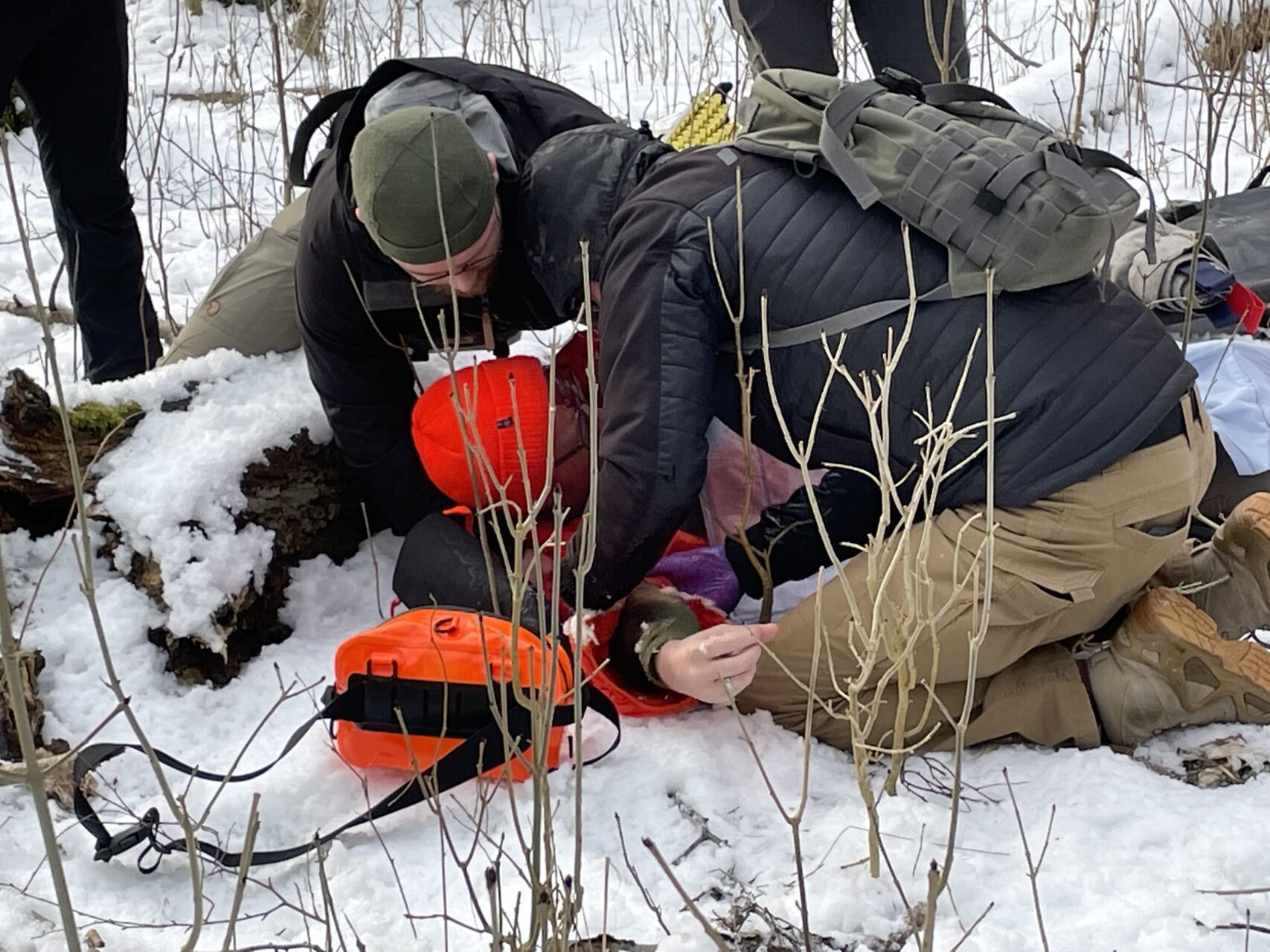
The final day culminates in an approximately eight-hour field exercise.
Participants manage realistic casualties portrayed by live role-players and must provide continuing medical care while operating with limited personnel and equipment.
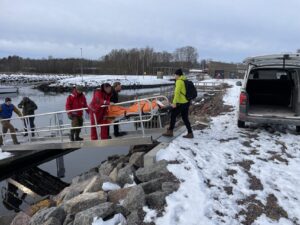
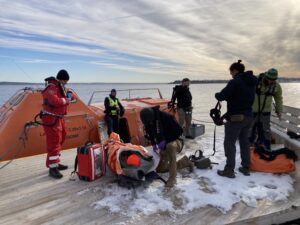
Patients may need to be assessed, treated, reassessed and transported over distance between different treatment locations.
The exercise requires participants to integrate everything covered during the previous days, including:
- casualty assessment;
- clinical decision-making;
- advanced procedures;
- prolonged patient care;
- medication management;
- monitoring;
- documentation;
- communication;
- telemedicine;
- patient movement;
- logistics;
- teamwork;
- resource management; and
- evacuation planning.
The objective is not simply to complete individual medical procedures.
Participants must manage the entire patient journey in an austere environment.
Training based on established austere medicine principles
The AEC curriculum is developed by Specialized Medical Standards (SMS) and incorporates best practices and clinical guidance from areas including:
- Prolonged Field Care (PFC)
- Prolonged Casualty Care (PCC)
- Emergency and critical care medicine
- Wilderness medicine
- Military operational medicine
- Contemporary medical literature and clinical guidelines
The programme was developed with input from subject-matter experts with extensive experience in Special Operations, emergency medicine, EMS and austere healthcare.
Why AEC?
Conventional prehospital medicine frequently assumes that definitive care is relatively close.
In austere environments that assumption may no longer be valid.
Weather, geography, conflict, infrastructure failure, maritime operations, major incidents or limited transport capacity can turn what would normally be a short prehospital phase into hours of patient management.
Participants may suddenly need to perform functions normally distributed across several parts of a healthcare system.
AEC prepares providers for exactly this problem.
The course develops the clinical judgement, practical skills and adaptability required to continue delivering effective care when evacuation is delayed, resources are limited and you are the medical system.
Course format
Online pre-course learning
Participants complete preparatory learning before attending the practical programme.
Four-day practical course
Hands-on training
The majority of the course consists of practical skills and scenario-based learning.
Extended field exercise
The final day includes an approximately eight-hour integrated austere medical exercise.
Key course themes
Assess – Stabilise – Monitor – Reassess – Sustain – Evacuate
AEC develops the ability to transition from immediate emergency treatment to sustained patient management.
Participants leave the course with a broader understanding of how to:
- treat complex casualties;
- recognise deterioration;
- manage prolonged evacuation;
- provide advanced clinical interventions within their scope of practice;
- deliver effective nursing and supportive care;
- use ultrasound and telemedicine as clinical support tools;
- work with limited equipment;
- prioritise resources; and
- make sound clinical decisions when the normal healthcare system is not immediately available.